1. The Age and Expansion of the Universe:
* Precision Measurement of Hubble Constant: Hubble helped refine the measurement of the Hubble Constant, which determines the rate of expansion of the universe. This led to a better understanding of the universe's age, estimated to be around 13.8 billion years.
* Dark Energy Discovery: Hubble's observations of distant supernovae revealed that the universe's expansion is accelerating, pointing to the existence of "dark energy," a mysterious force that accounts for 70% of the universe's energy density.
2. Understanding Galaxies and Stars:
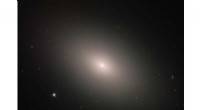
* Detailed Images of Galaxies: Hubble's high-resolution images provided unprecedented detail of galaxies, allowing astronomers to study their structure, composition, and evolution. This includes studying the distribution of stars, gas, and dust within galaxies.
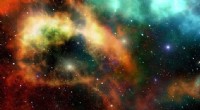
* Star Formation and Evolution: Hubble's observations of stellar nurseries helped understand how stars form from collapsing clouds of gas and dust. It also provided insight into the evolution of stars, including their life cycles and eventual fate.
* Black Hole Observations: Hubble's images of active galactic nuclei and quasars provided evidence for the existence of supermassive black holes at the center of galaxies.
3. Planetary Science and Exoplanets:
* Planetary Atmospheres: Hubble observed the atmospheres of planets in our solar system, including Jupiter, Saturn, and Uranus, revealing their composition and dynamics.
* Exoplanet Discoveries: Hubble played a key role in the discovery and characterization of exoplanets, planets orbiting stars beyond our solar system. It helped determine their size, mass, and atmospheric composition.
4. The Early Universe and Cosmic Microwave Background:
* Deep Field Observations: Hubble's deep field images captured faint, distant galaxies, providing a glimpse into the early universe.
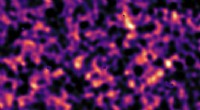
* Cosmic Microwave Background: Hubble provided data that helped refine the understanding of the cosmic microwave background radiation, the afterglow of the Big Bang.
5. Other Contributions:
* Comet Observations: Hubble observed comets, revealing their composition, structure, and interaction with the Sun.
* Supernova Observations: Hubble captured images of supernova explosions, providing insights into the death of stars and the creation of heavy elements.
In summary, the Hubble Space Telescope has been a game-changer in astronomy, providing unparalleled views of the cosmos and revolutionizing our understanding of the universe's origin, evolution, and composition. It has paved the way for future space telescopes and has inspired generations of astronomers and the public alike.