* Lifespan: More massive stars burn through their fuel much faster than smaller stars. A massive star might only live for a few million years, while a small star could live for trillions of years.
* Luminosity: Massive stars are significantly brighter than less massive stars. This is due to the higher pressure and temperature in their cores, leading to faster nuclear fusion rates.
* Surface Temperature: Massive stars have hotter surfaces than less massive stars. This is related to their high luminosity and faster fusion rates.
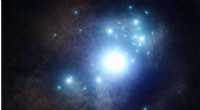
* Color: The color of a star is related to its surface temperature. Massive stars are often blue or white, while less massive stars tend to be yellow, orange, or red.
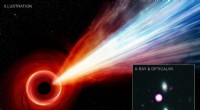
* Evolutionary Path: The mass of a star determines its final fate. Massive stars eventually explode as supernovae, leaving behind either a neutron star or a black hole. Less massive stars like our Sun will become red giants and then white dwarfs.
* Size: While not always directly proportional, massive stars are generally much larger than less massive stars.
In essence, a star's mass sets the stage for its entire life story, from its birth to its dramatic death.