Analogy: Imagine a basketball court. Galaxies would be like individual grains of sand scattered across the entire court. The rest of the court would represent the vast empty space between galaxies.
Estimation:
* Galaxies: There are estimated to be trillions of galaxies in the observable universe.
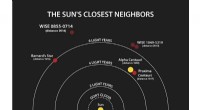
* Empty Space: The distance between galaxies is vast, with typical separations of millions of light-years.
Key Points:
* Vast Distances: The universe is incredibly vast, and the distances between galaxies are far greater than the sizes of the galaxies themselves.
* Cosmic Web: Galaxies are not randomly scattered but tend to cluster together in filaments and sheets, forming a large-scale structure called the cosmic web. However, the space between these structures remains mostly empty.
* Dark Matter: A significant portion of the universe's mass is attributed to dark matter, which is invisible and interacts only weakly with light. Dark matter plays a role in the structure of the universe, influencing the distribution of galaxies and empty space.
Conclusion:
While the exact ratio of empty space to galaxy space is impossible to calculate precisely, it's clear that the universe is dominated by empty space. Galaxies occupy a minuscule fraction of the total volume, highlighting the immense scale and vast emptiness of the cosmos.