The universe is a vast and mysterious place, but we have developed various methods to investigate it, each with its strengths and limitations:
1. Observational Astronomy:
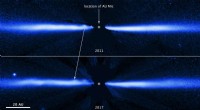
* Telescopes: Optical, infrared, radio, X-ray, and gamma-ray telescopes collect light from celestial objects, allowing us to study their composition, temperature, motion, and evolution.
* Ground-based Telescopes: These are the most common type, benefiting from being less expensive and offering more accessibility. They however, are subject to atmospheric disturbances.
* Space Telescopes: Located above Earth's atmosphere, these telescopes provide clearer images and access to wavelengths that are absorbed by the atmosphere (e.g., Hubble Space Telescope).
* Spectroscopy: Studying the spectrum of light emitted or absorbed by celestial objects reveals their chemical composition, temperature, and motion.
* Astrometry: Precisely measuring the positions and motions of stars and other celestial objects to understand their orbits, distances, and gravitational interactions.
* Photometry: Measuring the brightness of objects to determine their luminosity, distance, and evolution.
2. Theoretical Cosmology:
* Mathematical Models: Using theoretical frameworks like general relativity, quantum mechanics, and particle physics to develop models describing the evolution of the universe, the formation of galaxies and stars, and the nature of dark matter and dark energy.
* Computer Simulations: Complex simulations run on powerful computers to test theoretical models and predict astronomical phenomena.
* Theoretical Physics: Exploring fundamental questions about the universe, such as its origin, ultimate fate, and the nature of time and space.
3. Space Exploration:
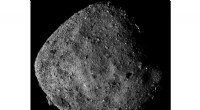
* Spacecraft: Robotic probes like Voyager, Cassini, and Curiosity travel to other planets, moons, and asteroids to study their composition, geology, and potential for life.
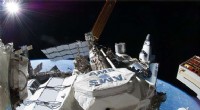
* Human Spaceflight: Missions like the Apollo missions to the Moon and the International Space Station allow astronauts to perform research and conduct experiments in space.
4. Other Methods:
* Particle Physics: Experiments like the Large Hadron Collider (LHC) study the fundamental building blocks of matter and the forces that govern them, shedding light on the early universe and its evolution.
* Gravitational Waves: Detecting ripples in spacetime caused by massive cosmic events like black hole mergers provides a new way to study the universe.
* Neutrino Astronomy: Studying neutrinos, which interact very weakly with matter, can provide insights into the interior of stars, supernovae, and other extreme environments.
Challenges in Investigating the Universe:
* Vast Distances: The universe is incredibly large, making it challenging to gather information about distant objects.
* Dim Objects: Many objects are faint and difficult to observe, requiring sophisticated telescopes and long exposure times.
* Limited Access: We can only access a limited portion of the universe due to the constraints of Earth's atmosphere and technology.
* Unpredictability: Many astronomical phenomena are unpredictable, making it difficult to plan observations and collect data.
Despite these challenges, we continue to make significant progress in understanding the universe through ongoing research and technological advancements.