1. Stars:
* All stars emit infrared radiation. The amount and peak wavelength depend on their temperature.
* Cooler stars (red dwarfs, brown dwarfs) emit most of their energy in the infrared.
* Hotter stars (like our Sun) emit infrared radiation along with visible light and ultraviolet radiation.
2. Planets:
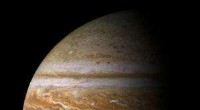
* Planets, both rocky and gaseous, emit infrared radiation.
* This is because they are warmed by the star they orbit.
* Exoplanet detection: Infrared telescopes can detect the heat signature of planets orbiting other stars, even if the planets are too small and faint to be seen directly.
3. Dust and Gas Clouds:
* Interstellar clouds of dust and gas absorb visible light from stars but re-emit it as infrared radiation.
* This makes them easier to study with infrared telescopes.
* Star formation: Infrared observations can reveal the areas within these clouds where new stars are forming.
4. Galaxies:
* Galaxies emit infrared radiation due to the combined light of their stars, dust, and gas.
* Active Galactic Nuclei (AGN): These are the supermassive black holes at the centers of some galaxies, which emit enormous amounts of infrared radiation.
5. Other Objects:
* Comets and Asteroids: These icy bodies can emit infrared radiation as they heat up near the Sun.
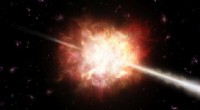
* Supernova Remnants: The expanding debris from exploding stars emits infrared radiation.
Infrared Astronomy:
* Infrared telescopes like the Spitzer Space Telescope and the James Webb Space Telescope are designed to study these objects.
* They allow us to see through dust clouds, study cool objects, and observe objects that are too faint or distant to be seen in visible light.
To summarize, almost everything in space emits infrared radiation, making it a crucial tool for astronomers to study the universe.