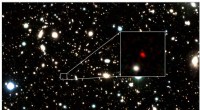
* Dust Absorption: Interstellar dust, composed of tiny particles of rock, ice, and other materials, absorbs more blue light than red light. This absorption is wavelength-dependent, meaning that shorter wavelengths (blue) are absorbed more strongly than longer wavelengths (red).
* Red Light Transmission: As a result, the light that reaches us from a star that has passed through a dusty region has had its blue light preferentially absorbed, leaving behind a greater proportion of red light. This makes the star appear redder than it actually is.
Here's an analogy: Imagine shining a white light through a blue filter. The filter absorbs most of the blue light, allowing only red light to pass through. The light that emerges from the filter will appear reddish, even though the original light source was white.
Factors influencing reddening:
* Amount of Dust: The more dust a star's light passes through, the redder it appears.
* Dust Composition: The composition of the dust also plays a role, as different materials absorb different wavelengths of light.
* Distance: Stars that are farther away are more likely to have their light reddened by dust because their light has to travel through more of it.
Other factors:
* Stellar Evolution: Red giants, which are stars in a later stage of their life, are inherently redder due to their cooler surface temperatures. However, this is a separate phenomenon from interstellar reddening.
* Doppler Shift: The Doppler effect can also cause stars to appear redder if they are moving away from us. This is because the wavelengths of their light are stretched, shifting them towards the red end of the spectrum.
It's important to note: While reddening provides valuable information about the composition and distribution of interstellar dust, it can also make it difficult to determine the true color and temperature of stars. Astronomers use various techniques to account for reddening and obtain accurate measurements of stellar properties.