1. Observing Light:
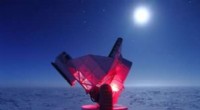
* Telescopes: Telescopes are the primary tool for observing stars. They gather light from stars, allowing scientists to study their:
* Brightness: How bright the star appears from Earth.
* Color: The color of a star reveals its temperature.
* Spectra: By splitting starlight into its component wavelengths, we can analyze the elements present in the star's atmosphere.
* Different Types of Telescopes:
* Optical telescopes: Use lenses or mirrors to focus visible light.
* Radio telescopes: Detect radio waves emitted by stars.
* Infrared telescopes: Detect infrared radiation, which can penetrate dust clouds obscuring stars.
* Ultraviolet, X-ray, and Gamma-ray telescopes: These telescopes study different wavelengths of light, revealing information about the star's high-energy processes.
2. Analyzing Starlight:
* Spectroscopy: Analyzing the spectrum of starlight helps determine:
* Chemical composition: Each element has a unique spectral signature, revealing what a star is made of.
* Temperature: The color and spectral lines indicate a star's temperature.
* Motion: The Doppler shift of spectral lines tells us how fast a star is moving towards or away from Earth.
* Magnetic fields: Certain spectral lines can indicate the presence and strength of magnetic fields.
3. Studying Stellar Evolution:
* Hertzsprung-Russell (HR) Diagram: This diagram plots stars based on their temperature and luminosity. It allows scientists to understand the life cycle of stars and how they evolve over time.
* Stellar Models: Scientists create computer models of stars to simulate their internal structure and evolution. These models help predict the behavior of stars under different conditions.
4. Observing Stellar Phenomena:
* Supernovae: Explosions of massive stars, observed through their intense light and unique spectra.
* Binary Stars: Systems of two or more stars orbiting each other, revealing information about the gravitational interaction between stars.
* Star Clusters: Groups of stars born at roughly the same time, offering insights into star formation and evolution.
5. Space Missions:
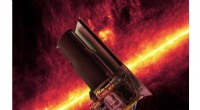
* Space Telescopes: The Hubble Space Telescope and the James Webb Space Telescope are prime examples of space telescopes providing unparalleled views of the universe and helping scientists understand the origins and evolution of stars.
* Spacecraft: Missions like the Kepler mission have discovered thousands of exoplanets, helping us understand the diversity of planetary systems and potentially find habitable worlds.
In summary, scientists utilize a wide range of tools and techniques to study stars, unraveling their secrets and deepening our understanding of the universe.