1. Observing the Moon's Orbit:
* Kepler's Laws of Planetary Motion: These laws, formulated centuries ago, describe the relationship between a planet's orbital period, its distance from the Sun, and the mass of the Sun. Applying these laws to the Moon's orbit around Earth allowed scientists to determine the Moon's mass.
* Newton's Law of Universal Gravitation: This law states that the force of gravity between two objects is directly proportional to the product of their masses and inversely proportional to the square of the distance between them. Knowing the Moon's mass and its distance from Earth, scientists could calculate the gravitational force acting on it and thus the Moon's gravity.
2. Observing the Moon's Effect on Earth:
* Tides: The Moon's gravitational pull causes tides on Earth. By studying the tidal patterns, scientists could estimate the Moon's mass and its gravitational influence.
3. Using Spacecraft Data:
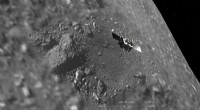
* Spacecraft Trajectories: The trajectories of spacecraft orbiting the Moon provide valuable information about the Moon's gravitational field. By analyzing these trajectories, scientists can map the Moon's gravity with great accuracy.
In summary, NASA used a combination of physical laws, astronomical observations, and spacecraft data to calculate the Moon's gravity before sending humans there. These methods allowed them to know that the Moon's gravity was about 1/6th that of Earth's.