1. The Nebular Cloud:
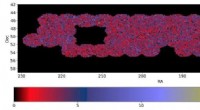
* Giant Molecular Clouds: Star formation starts within immense clouds of gas and dust known as giant molecular clouds (GMCs). These clouds are primarily composed of hydrogen and helium, with trace amounts of heavier elements.
* Cold and Dense: GMCs are incredibly cold (around -260°C or -436°F) and very dense, providing the necessary conditions for gravitational collapse.
2. Triggering Collapse:
* Supernova Shock Waves: One of the most common triggers for star formation is the shock wave from a nearby supernova explosion. These shock waves compress the gas and dust in the GMC, increasing its density.
* Other Triggers: Other triggers include collisions between GMCs, the gravitational pull of nearby stars, and even the turbulence within the cloud itself.
3. Gravitational Instability:
* Density Fluctuations: Within the GMC, there are slight density variations. These areas with slightly higher density have a stronger gravitational pull.
* Core Formation: As gravity pulls more gas and dust into these denser regions, the core of the cloud becomes increasingly dense and hot.
4. Protostar Formation:
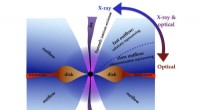
* Accretion Disk: As the core continues to collapse, it forms a rotating disk of gas and dust called an accretion disk. Material from the disk falls onto the core, adding mass and increasing its temperature.
* Protostar Ignition: Eventually, the core becomes so dense and hot that nuclear fusion begins. This is the point where the core ignites and becomes a protostar. The energy released by fusion pushes back against gravity, slowing the collapse.
5. Evolution to a Main-Sequence Star:
* Hydrostatic Equilibrium: The protostar continues to accrete material, growing larger and hotter. Eventually, the outward pressure from fusion balances the inward pull of gravity, achieving hydrostatic equilibrium. This marks the birth of a main-sequence star.
6. Stellar Winds and Jets:
* Outflow of Material: As a protostar grows, it ejects powerful jets of gas and dust, known as bipolar outflows, along its rotational axis. These outflows can sculpt the surrounding nebula and even influence the formation of other stars in the region.
Key Points:
* Star formation is a complex process that occurs over millions of years.
* The initial conditions within the GMC, such as its density and temperature, play a critical role in determining the type of star that forms.
* The process of star formation is ongoing in many nebulae throughout the universe.
Let me know if you'd like a deeper dive into any specific aspect of star formation!