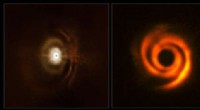
* Stars form constantly: While stars do burn out over extremely long timescales, new stars are constantly forming from interstellar gas and dust clouds.
* The universe is expanding: The expansion of the universe means that new regions of space are becoming accessible for star formation.
* The timescale is vast: The lifespan of stars varies greatly, from a few million years for massive stars to trillions of years for small red dwarfs. The time it takes for a significant number of stars to burn out is vastly longer than the age of the universe.
So, while individual stars do burn out, new stars are constantly being born, and the overall number of stars in the observable universe is likely increasing.
However, it's worth noting:
* We don't know the exact number of stars: The universe is vast, and our observations are limited. We can only estimate the number of stars based on our current knowledge and technology.
* The rate of star formation is not constant: It varies over time and location in the universe.
Overall, while the number of stars might fluctuate slightly, it's not declining in any significant way.