1. The Radial Velocity Method (Doppler Spectroscopy)
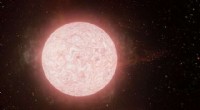
* How it works: This method measures the "wobble" of a star caused by the gravitational pull of an orbiting planet. As a planet orbits a star, it tugs on the star, causing it to move slightly towards and away from Earth. This motion changes the star's light, making it appear slightly redder or bluer (due to the Doppler effect).
* Strengths: Highly effective for finding large planets close to their stars.
* Limitations: Less sensitive to small planets or those far from their stars.
2. The Transit Method
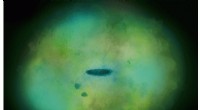
* How it works: This method detects the slight dimming of a star's light as a planet passes in front of it (like a mini-eclipse). The amount of dimming and the duration of the transit provide information about the planet's size and orbital period.
* Strengths: Highly effective for finding planets of various sizes and orbital distances.
* Limitations: Requires the planet to be orbiting its star in such a way that it crosses directly in front of the star from our perspective.
3. The Gravitational Microlensing Method
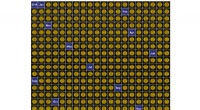
* How it works: This method utilizes the bending of light by gravity. When a star with a planet passes in front of a distant star, the gravity of the closer star acts like a lens, magnifying the light from the distant star. The planet's gravity also contributes to the lensing effect, creating a unique signal that reveals its presence.
* Strengths: Can detect planets that are far from their stars and even those that are free-floating (not orbiting a star).
* Limitations: This is a rare event, relying on the chance alignment of stars.
4. Direct Imaging
* How it works: This method directly captures images of planets orbiting other stars. This is a challenging task, as planets are much fainter than their stars. Astronomers use specialized telescopes and techniques, like adaptive optics, to block out the star's light and reveal the planet.
* Strengths: Can provide direct information about a planet's size, shape, and atmosphere.
* Limitations: Limited to detecting large planets that are far from their stars.
5. Astrometry
* How it works: This method measures the tiny wobble of a star caused by the gravitational pull of an orbiting planet. It's similar to radial velocity but instead of measuring changes in the star's light, it measures the star's position in the sky.
* Strengths: Can detect planets with a wide range of masses and orbital distances.
* Limitations: Requires incredibly precise measurements and is difficult to perform.
Future Methods:
* New and improved telescopes are constantly being developed, allowing astronomers to use existing methods with greater precision and explore new ones, such as:
* Space-based interferometry: This method uses multiple telescopes working together to improve resolution and sensitivity.
* Micro-arcsecond astrometry: This technique promises to improve the accuracy of astrometry measurements.
The development of these diverse methods has enabled astronomers to discover thousands of exoplanets, revolutionizing our understanding of planetary systems beyond our own.