Solar System
* Definition: A planetary system consisting of a star (the Sun) and all the celestial objects bound to it by gravity.
* Size: Roughly 1.8 light-years across.
* Components:
* Sun: A yellow dwarf star at the center.
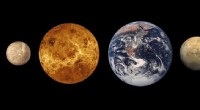
* Planets: Eight planets orbiting the Sun (Mercury, Venus, Earth, Mars, Jupiter, Saturn, Uranus, Neptune).
* Dwarf planets: Several, including Pluto and Eris.
* Moons: Natural satellites orbiting planets and dwarf planets.
* Asteroids: Rocky bodies mostly found in the asteroid belt between Mars and Jupiter.
* Comets: Icy bodies that orbit the Sun on eccentric paths.
* Age: Approximately 4.6 billion years old.
Milky Way Galaxy
* Definition: A barred spiral galaxy that contains our solar system.
* Size: Approximately 100,000 light-years across.
* Components:
* Billions of stars: A vast number of stars of different sizes, ages, and colors.
* Gas and dust: Interstellar medium composed of hydrogen, helium, and other elements.
* Nebulae: Giant clouds of gas and dust where stars are born.
* Globular clusters: Spherical groups of stars.
* Open clusters: Loose groups of stars.
* Supermassive black hole: Sagittarius A* resides at the galactic center.
* Age: Approximately 13.6 billion years old.
Key Differences
* Scale: The Milky Way is vastly larger than our solar system (roughly 55 million times larger in volume).
* Complexity: The Milky Way contains billions of stars, gas, and dust, making it much more complex than our solar system.
* Composition: While our solar system is dominated by a single star, the Milky Way is a collection of stars, gas, and dust.
* Location: Our solar system is located on one of the spiral arms of the Milky Way, called the Orion Arm.
* Age: The Milky Way is much older than our solar system.
Analogy
Imagine a single grain of sand representing our solar system. Now imagine that grain of sand sitting on a beach. That beach would be analogous to the Milky Way galaxy, containing countless other grains of sand (stars) and other features like waves (nebulae).
Key takeaway: Our solar system is just a small, insignificant part of the much larger and more complex Milky Way galaxy.