Here's a more detailed explanation:
* Imagine a triangle formed by the observer, the first celestial body, and the second celestial body.
* The angular separation is the angle at the observer's position in this triangle.
* The larger the angle, the further apart the objects appear in the sky.
* The smaller the angle, the closer the objects appear in the sky.
Examples:
* The angular separation between the Sun and the Moon during a solar eclipse can be less than one degree.
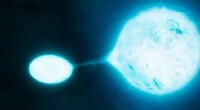
* The angular separation between the two stars in a binary star system can be a few arcseconds.
* The angular separation between the Earth and the Sun is about 179 degrees, as we see them on opposite sides of the sky.
Measuring Angular Separation:
* Telescopes are often equipped with reticles that help determine the angular separation between objects.
* Star charts and online tools can also be used to find the angular separation between celestial bodies.
Importance:
Understanding angular separation is important in various fields, including:
* Astronomy: For studying binary stars, star clusters, and the distances to celestial objects.
* Navigation: For determining the position of ships and aircraft.
* Space exploration: For planning missions and observing the universe.
In essence, angular separation is a way to describe how far apart celestial bodies appear to be from our point of view on Earth.