Here's a more detailed explanation:
* Earth's energy balance: Earth receives energy from the Sun, mostly in the form of visible light and some ultraviolet radiation. This energy is absorbed by the Earth's surface and atmosphere.
* Re-emission: Earth then re-emits this absorbed energy back into space as thermal radiation. Since the Earth is much cooler than the Sun, this radiation is at longer wavelengths, primarily in the infrared.
* Peak emission: The peak of Earth's emitted radiation falls around 10 micrometers, well within the infrared range.
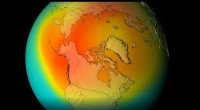
* Greenhouse effect: Some of this infrared radiation is absorbed by greenhouse gases in the atmosphere (like carbon dioxide, methane, and water vapor), which warms the planet.
It's important to note that Earth also emits a small amount of radiation in the visible and ultraviolet portions of the spectrum, but these are much weaker compared to the infrared radiation.