1. Actual size and luminosity: Larger and brighter stars will appear larger.
2. Distance from Earth: Stars closer to Earth will appear larger than those farther away.
Measuring Apparent Size:
We don't measure the apparent size of stars in the same way we measure the size of objects on Earth. Instead, we use a measurement called apparent magnitude.
* Magnitude: This is a logarithmic scale that measures the brightness of a star as seen from Earth. Lower numbers indicate brighter stars.
* Angular diameter: This measures the angle subtended by a star in the sky, but it's incredibly small for stars, even the largest.
How Big Do Stars Appear?
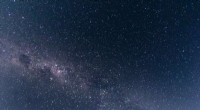
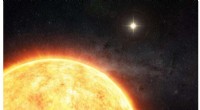
* To the naked eye: Most stars appear as points of light, even the brightest ones. Their apparent size is too small to be discerned by our eyes.
* With telescopes: Even powerful telescopes can only resolve a few of the largest and closest stars as tiny disks.
* Other methods: Astronomers use various techniques, such as interferometry, to measure the angular diameter of stars indirectly.
Example:
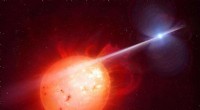
The star Betelgeuse (in the constellation Orion) is one of the largest stars visible to the naked eye. While it appears as a bright point of light, it's actually so large that if it were in place of our Sun, it would engulf the orbits of Mercury, Venus, Earth, and Mars!
Conclusion:
While we can't visually perceive the true size of stars due to their immense distance, we can measure their apparent size using different techniques. This allows us to understand their true size and luminosity, even if they appear as tiny points of light in the night sky.