1. Actual Size:
* This is the most obvious factor. Larger stars naturally appear bigger.
* However, it's important to remember that even the largest stars are incredibly far away, so even the biggest ones look like tiny points of light to us.
2. Distance:
* This is arguably the most important factor. The further a star is from Earth, the smaller it will appear. This is why even gigantic stars, like Betelgeuse, look like tiny dots to us.
* Inverse Square Law: The apparent brightness of a star decreases with the square of the distance. So, if a star is twice as far away, it will appear four times fainter.
3. Luminosity:
* This refers to the total amount of light a star emits. More luminous stars will appear brighter, even at the same distance.
* A star's luminosity is determined by its size, temperature, and age.
4. Atmospheric Conditions:
* Scattering: The Earth's atmosphere can scatter starlight, making stars appear blurry or distorted. This effect is more pronounced when stars are close to the horizon.
* Turbulence: Air turbulence in the atmosphere can cause stars to twinkle.
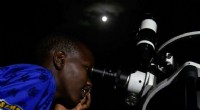
5. Telescope/Magnification:
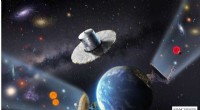
* Telescopes and magnification can make stars appear larger. This is because they collect more light and focus it onto a smaller area, effectively making the star appear brighter and larger.
6. Human Perception:
* Our eyes are not perfect measuring devices. Stars appear larger to us when they are close to other stars, a phenomenon called "apparent size."
* Also, bright stars tend to look larger than dimmer stars, even if they are the same size in reality.
In summary:
A star's apparent size is a complex combination of its actual size, distance, luminosity, atmospheric conditions, and the tools used to observe it. While the actual size of a star is important, it is often overshadowed by the vast distances involved.