1. Binary Star Systems:
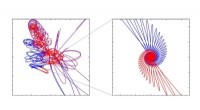
* Kepler's Third Law: This law states that the square of the orbital period of a planet is proportional to the cube of the semi-major axis of its orbit. By observing the orbital period and separation of two stars in a binary system, we can calculate their combined mass.
* Doppler Spectroscopy: By measuring the Doppler shift in the light emitted from a star, we can determine its radial velocity. If the star is in a binary system, we can observe periodic changes in its radial velocity as it orbits its companion. This allows us to calculate the mass of both stars.
2. Stellar Evolution Models:
* Stellar Evolution Theory: Scientists use computer models to simulate the evolution of stars based on their mass, composition, and age. By comparing the model predictions with observed properties of the star, such as its luminosity, temperature, and radius, we can estimate its mass.
3. Gravitational Microlensing:
* Gravitational Lensing: When a massive object, like a star, passes in front of a distant light source, its gravity bends the light from the background source. This bending effect can be used to calculate the mass of the foreground star.
4. Clusters:
* Star Clusters: Stars in clusters are born around the same time and have similar compositions. By studying the distribution of stars in a cluster and their properties, we can use statistical methods to estimate the mass of individual stars.
5. Asteroseismology:
* Stellar Oscillations: Stars oscillate or vibrate due to internal processes. Studying the frequencies of these oscillations can provide information about the star's internal structure, including its mass.
It's important to note:
* These methods often provide estimates rather than precise values.
* The accuracy of the mass determination depends on the quality of the observations and the complexity of the system being studied.