1. Increased Gravitational Force: The closer a planet gets to the Sun, the stronger the gravitational pull between them. This causes the planet to:
* Speed up: The planet's orbital velocity increases to maintain its orbit.
* Experience stronger tides: The gravitational pull of the Sun on the planet's near side is stronger than on its far side, creating tidal forces that can cause stretching and deformation.
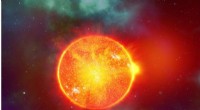
2. Increased Solar Radiation: The planet receives more solar energy as it moves closer to the Sun. This leads to:
* Higher surface temperatures: The planet's surface will heat up, potentially leading to melting of ice caps, increased evaporation, and other climate changes.
* Stronger solar wind: The Sun's outward stream of charged particles becomes more intense, potentially stripping away the planet's atmosphere.
* Increased photochemical reactions: The increased radiation can drive reactions in the planet's atmosphere, potentially leading to the formation of new molecules.
3. Orbital Changes: The planet's orbit will change slightly due to the increased gravitational force. This could lead to:
* A more elliptical orbit: The planet's orbit might become more oval-shaped, leading to greater variations in its distance from the Sun.
* Potential instability: In extreme cases, the increased gravitational pull could destabilize the planet's orbit, potentially leading to a collision with the Sun.
4. Other Factors:
* Planet's Size and Composition: The planet's size and composition will influence how it reacts to the increased solar radiation and gravitational force. A smaller, less massive planet will experience a greater change in its temperature and orbit.
* Presence of an Atmosphere: A planet with a thick atmosphere can help to regulate temperature and protect it from the harshest effects of solar radiation.
Important Note: It's very unlikely that planets naturally change their orbits significantly to move closer to the Sun. Planets are locked in their orbits by gravity and the initial conditions of their formation. However, a close encounter with another celestial object could theoretically alter a planet's orbit and bring it closer to the Sun.