* As the distance between two bodies increases, the gravitational force between them decreases rapidly.
* The force decreases by the square of the distance.
Here's a breakdown:
1. Newton's Law of Universal Gravitation: This law states that every particle in the Universe attracts every other particle with a force that is:
* Proportional to the product of their masses: More massive objects exert a stronger gravitational pull.
* Inversely proportional to the square of the distance between their centers: This is the key point – the further apart they are, the weaker the attraction.
2. Mathematical Representation: The gravitational force (F) between two objects with masses m1 and m2, separated by a distance r, is given by:
F = G * (m1 * m2) / r^2
Where G is the gravitational constant.
3. Practical Implications:
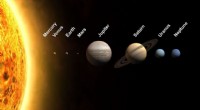
* Planets orbiting the Sun: Planets closer to the Sun experience a stronger gravitational pull and orbit faster than those farther away.
* Tides on Earth: The Moon's gravitational pull is stronger on the side of Earth closest to it, causing high tides. The pull is weaker on the opposite side, leading to low tides.
* Formation of galaxies: Gravity plays a crucial role in the formation of galaxies, attracting and holding stars together.
* Black holes: The intense gravitational pull of black holes is due to their immense density and the extreme curvature of spacetime around them.
In conclusion, the distance between two celestial bodies is a crucial factor determining the strength of their gravitational interaction. As the distance increases, the gravitational force weakens significantly, following an inverse square relationship.