Earth-based Instruments:
* Telescopes: These are the most fundamental instruments used for observing celestial objects.
* Optical Telescopes: Collect visible light and allow us to see the planets, moons, and other objects in our solar system.
* Radio Telescopes: Detect radio waves emitted by planets and other celestial objects.
* Infrared Telescopes: Observe objects that emit infrared radiation, allowing us to study their temperature and composition.
* Ultraviolet Telescopes: Detect ultraviolet radiation, which can be used to study the atmospheres of planets and the composition of stars.
* Spectrographs: These instruments separate light into its different wavelengths, allowing astronomers to identify the chemical composition of celestial objects.
* Interferometers: Combine the light from multiple telescopes to create a higher resolution image.
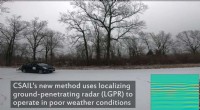
* Ground-based radar: This technique allows scientists to study the surfaces of planets and moons by bouncing radio waves off them.
Space-based Instruments:
* Spacecraft: These are robotic probes that are sent to explore different parts of the solar system.
* Orbiters: Circle around a planet or moon, collecting data about its atmosphere, surface, and magnetic field.
* Landers: Touch down on a planet or moon to study its surface composition, geology, and atmosphere.
* Flybys: Pass by a planet or moon, collecting data for a brief period.
* Satellites: Orbit Earth and collect data about the sun, planets, and other celestial objects.
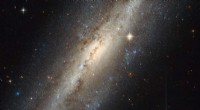
* Space Telescopes: Orbit above Earth's atmosphere, where they are not affected by atmospheric distortion and can observe in wavelengths that are blocked by the Earth's atmosphere. Examples include Hubble Space Telescope, Chandra X-ray Observatory, and Spitzer Space Telescope.
Other Instruments:
* Lasers: Used to measure distances to planets and moons.
* Mass spectrometers: Analyze the composition of planetary atmospheres and surfaces.
* Seismometers: Detect seismic activity on planets and moons.
* Magnetometers: Measure magnetic fields.
These are just some of the instruments used to study the solar system. As technology advances, new and improved instruments are being developed to help us learn more about our cosmic neighborhood.