1. Earth as the Center:
* He believed that the Earth was a sphere, a conclusion he reached based on observations like the changing angle of the North Star with latitude.
* The Earth was stationary and everything else revolved around it.
2. Concentric Spheres:
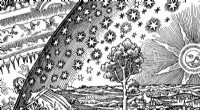
* Aristotle proposed that the universe was composed of a series of concentric spheres, with the Earth at the center.
* Each sphere housed a celestial body, like the Moon, Sun, planets, and stars.
* The spheres were made of a fifth element called "aether," which was believed to be incorruptible and perfect.
* The outermost sphere was the "Prime Mover," a divine entity responsible for the motion of all the spheres.
3. Motion and Change:
* Aristotle believed that the celestial spheres moved in perfect circles, generating the observed movements of the heavenly bodies.
* This motion was eternal and unchanging, a reflection of the perfection of the heavens.
* On Earth, however, there was constant change and imperfection, driven by the four elements: earth, water, air, and fire.
4. Influence and Legacy:
* Aristotle's theory of the universe dominated scientific thought for nearly 2,000 years.
* It was challenged by thinkers like Copernicus and Galileo in the 16th and 17th centuries, leading to the development of the heliocentric model.
* Despite its inaccuracy, Aristotle's model was a significant contribution to understanding the universe, and his ideas about motion and change continued to influence scientific thought for centuries.
Key Points to Remember:
* Geocentric: Earth at the center
* Concentric spheres: Heavenly bodies on separate spheres
* Aether: Fifth element for the spheres
* Prime Mover: Divine entity for the universe's motion
* Lasting impact: Influenced science for centuries
It's crucial to note that Aristotle's model was based on limited observations and philosophical arguments, and it was eventually superseded by more accurate models.