1. Thermal Radiation:
* High Temperature: The gas in these regions is incredibly hot, reaching temperatures of thousands to tens of thousands of Kelvin.
* Blackbody Radiation: This high temperature causes the atoms and molecules in the gas to vibrate and move rapidly. This motion generates electromagnetic radiation across a broad spectrum, with a peak in the visible and infrared regions. The hotter the gas, the more light it emits and the bluer the color of that light.
2. Collisional Excitation:
* High Density: The gas is also very dense, meaning the atoms and molecules frequently collide with each other.
* Energy Transfer: These collisions can transfer energy to electrons in the atoms, exciting them to higher energy levels.
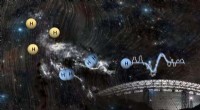
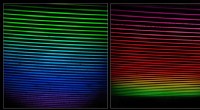
* De-excitation: When the excited electrons return to their ground state, they release photons of light with specific wavelengths, corresponding to the energy difference between the levels. This process is responsible for the emission lines seen in the spectra of star-forming regions.
3. Shock Waves:
* Outflows and Jets: Young stars often launch powerful jets and outflows of gas.
* Energy Dissipation: These jets and outflows collide with the surrounding gas, creating shock waves.
* Heating and Emission: The shock waves heat the gas and cause it to emit light.
4. Dust Emission:
* Infrared Radiation: While primarily composed of gas, star formation regions also contain dust particles. These particles absorb ultraviolet and visible light from the young stars and re-emit it in the infrared portion of the spectrum.
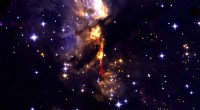
In Summary: The hot gas in star formation regions emits light due to the combination of its high temperature, dense environment, collisions that excite atoms, and the presence of dust particles that re-emit absorbed light.