Galaxies:
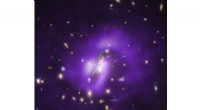
* Massive collections of stars, gas, dust, and dark matter. Think of them as gigantic cities of stars.
* Bound together by gravity. The gravitational pull keeps everything from flying apart.
* Contain billions or even trillions of stars. Our own Milky Way galaxy is estimated to have around 200 billion stars!
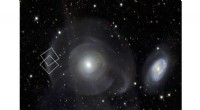
* Have different shapes: Spiral, elliptical, irregular.
* Examples: The Milky Way, Andromeda Galaxy.
Constellations:
* Patterns of stars that appear close together in the sky from Earth's perspective.
* Not physically connected. The stars in a constellation can be vastly different distances from Earth.
* Created by humans for storytelling and navigation. We connect the stars into shapes based on our imagination.
* Appear different depending on location and time of year. This is because Earth rotates and revolves around the Sun.
* Examples: Orion, Ursa Major (the Big Dipper), Cassiopeia.
Think of it this way:
* A galaxy is a massive city full of buildings (stars).
* A constellation is like a pattern you see when looking down at a city from above – maybe you see a group of buildings forming a shape like a "V".
The key difference is that galaxies are real, physical structures, while constellations are patterns we perceive.