How Age Affects Brightness:
* Main Sequence: Stars spend the majority of their lives on the main sequence, fusing hydrogen into helium in their cores. During this phase, a star's brightness is primarily determined by its mass. More massive stars are brighter and hotter. They also burn through their fuel faster, meaning they have shorter main sequence lifetimes.
* Evolutionary Stages: As stars age, they evolve through various stages:
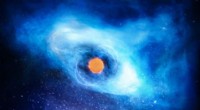
* Red Giants: After exhausting their core hydrogen, stars swell into red giants. They become cooler (redder) but significantly larger, which can make them appear brighter for a time.
* White Dwarfs: Eventually, many stars shed their outer layers and collapse into dense white dwarfs. These remnants are much smaller and cooler than their main sequence counterparts, resulting in a dramatic decrease in brightness.
* Variable Stars: Some stars undergo regular or irregular changes in brightness. These changes can be caused by pulsations, eclipses, or other factors.
Example:
A star like our Sun will gradually increase in brightness as it enters the red giant phase. However, it will ultimately become a much fainter white dwarf.
Key Takeaways:
* While mass is the primary factor determining a star's initial brightness, age plays a crucial role in its evolution and subsequent brightness changes.
* Stars generally become brighter as they evolve off the main sequence but ultimately fade as they reach their final stages.
* The relationship between age and brightness is complex and depends on the star's initial mass and its current evolutionary stage.
Let me know if you have any other questions!