* Orbital Position: Jupiter's orbit around the Sun is elliptical, meaning its distance from the Sun varies. When it's closer to the Sun (perihelion), it reflects more sunlight and appears brighter. When it's farther away (aphelion), it's dimmer.
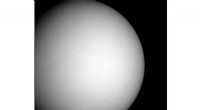
* Phase: Similar to the Moon, Jupiter goes through phases as we see it from Earth. When Jupiter is fully illuminated by the Sun (full phase), it's brightest. As it moves into a crescent phase, it appears dimmer. However, Jupiter's phases are subtle and not as dramatic as the Moon's.
* Atmospheric Changes: Jupiter's atmosphere is dynamic and constantly changing. Large storms and cloud formations can influence the amount of sunlight reflected back to Earth, causing variations in brightness.
* Earth's Position: The distance between Earth and Jupiter also affects its apparent brightness. When Earth and Jupiter are closer together, Jupiter appears brighter.
In summary: Jupiter's brightness varies due to its orbital position, its phase, atmospheric changes, and the distance between Earth and Jupiter.