Astronomy:
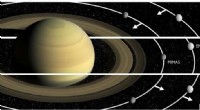
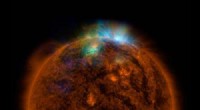
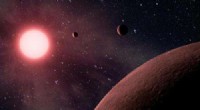
* Focus: Studying celestial objects like stars, planets, galaxies, nebulae, etc.
* Scope: Primarily observational, focusing on the properties, positions, motions, and evolution of these objects.
* Methods: Observation through telescopes, analysis of light, and other electromagnetic radiation.
* Examples: Measuring the distance to a star, classifying a galaxy's type, observing a supernova explosion.
Cosmology:
* Focus: Studying the universe as a whole, including its origin, structure, evolution, and ultimate fate.
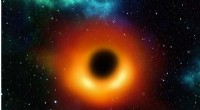
* Scope: Broader and theoretical, encompassing the large-scale structure of the universe, dark matter, dark energy, and the Big Bang theory.
* Methods: Combining observational data from astronomy with theoretical models and mathematical frameworks.
* Examples: Understanding the distribution of matter in the universe, explaining the cosmic microwave background radiation, predicting the future expansion of the universe.
In essence:
* Astronomy is like studying the trees in a forest, focusing on individual objects and their properties.
* Cosmology is like studying the forest itself, focusing on its overall structure, dynamics, and history.
Here's a simple analogy:
* Astronomy is like a botanist who studies individual plants.
* Cosmology is like an ecologist who studies the entire ecosystem.
Although distinct, cosmology and astronomy are intertwined. Cosmology relies on observations and data provided by astronomy, and astronomical observations often benefit from cosmological theories. They complement each other in the quest to understand the universe.