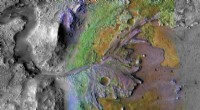
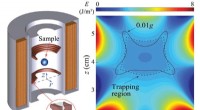
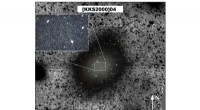
Astronomy is the oldest of the three, focusing on the observation and study of celestial objects. This includes planets, stars, galaxies, nebulae, and other objects in the universe. Astronomers use telescopes and other instruments to gather data, analyze it, and map the sky. They also study the history and evolution of the universe, but with a focus on individual objects and their properties.
Cosmology focuses on the origin, structure, evolution, and fate of the entire universe. It deals with fundamental questions like the Big Bang, dark matter, dark energy, and the ultimate fate of the universe. Cosmologists use theoretical models and simulations to interpret astronomical observations and understand the universe on the largest scales.
Astrophysics is the study of the physical processes that govern celestial objects. This includes the internal structure of stars, the formation of planets, the evolution of galaxies, and the nature of black holes. Astrophysicists use the laws of physics to explain the observed properties of astronomical objects.
Here's a table summarizing the key differences:
| Field | Focus | Tools & Methods |
|----------------|-----------------------------|----------------------------------------------------|
| Astronomy | Observation of celestial objects | Telescopes, observational data analysis, sky mapping |
| Cosmology | Universe as a whole | Theoretical models, simulations, observations of the large-scale structure |
| Astrophysics | Physical processes in space | Physics laws, numerical simulations, theoretical models |
* Astronomy: Provides the raw data and observations that form the foundation for the other two fields. Observing celestial objects gives us information about their composition, movement, and interactions.
* Cosmology: Provides a framework for understanding the overall structure and evolution of the universe. By studying the Big Bang and the expansion of space, cosmologists help us understand the history and future of the universe.
* Astrophysics: Explains the underlying physical processes that govern the objects observed by astronomers and studied by cosmologists. By applying physics to celestial objects, astrophysicists provide insights into the formation, evolution, and behavior of stars, planets, galaxies, and black holes.
These three fields work together, with each contributing its own expertise to our understanding of the universe.