Formation of Stars:
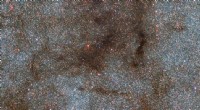
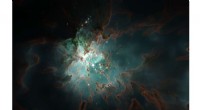
1. Giant Molecular Clouds (GMCs): These vast clouds of gas and dust, primarily hydrogen and helium, are the birthplace of stars.
2. Gravity: Within GMCs, gravity pulls particles together, slowly increasing density in certain areas.
3. Nuclear Fusion: As density and pressure increase, the core of the collapsing cloud heats up. Eventually, the core becomes hot and dense enough for nuclear fusion to begin, converting hydrogen into helium and releasing tremendous energy. This marks the birth of a star.
4. Stellar Evolution: The star's life cycle depends on its mass, with more massive stars burning through their fuel faster and having shorter lifespans.
Formation of Planets:
1. Protoplanetary Disks: As a star forms, the remaining material in the surrounding cloud forms a disk of gas and dust called a protoplanetary disk.
2. Accretion: Dust particles in the disk collide and stick together, forming larger particles, then planetesimals (small planetary bodies). These planetesimals continue to collide and accrete, growing into planets.
3. Planetary Differentiation: Over time, planets differentiate, with heavier elements sinking to the core and lighter elements forming the outer layers.
4. Evolution: Planets continue to evolve, influenced by internal heat, bombardment, and the effects of their star.
Key Forces at Play:
* Gravity: The primary force driving both star and planet formation, pulling matter together.
* Pressure: The inward force exerted by the weight of material in a collapsing cloud.
* Electromagnetism: Plays a role in the interactions between charged particles and in the formation of planetary atmospheres.
* Nuclear Fusion: The process that powers stars and provides the energy for their evolution.
It's important to note: The formation of stars and planets is a complex and ongoing process. Scientists are continually refining our understanding of these processes through observations and theoretical models.