* No Seismometers: We can't physically place seismometers on the Sun. It's far too hot and hostile for any instruments to survive.
* Remote Observation: Scientists rely on remote observations to study the Sun's interior. These observations include:
* Helioseismology: This is the study of the Sun's internal structure and dynamics using the Doppler effect on the Sun's surface. Sunlight is slightly shifted in frequency based on the movement of the solar surface, revealing the presence of waves propagating through the Sun's interior.
* Solar Oscillations: The Sun's surface vibrates like a bell, producing waves that travel through its interior. These oscillations are detected by changes in the brightness and velocity of the solar surface.
* Spectroscopy: Analyzing the spectrum of sunlight reveals information about the composition, temperature, and motion of the Sun's atmosphere, which can be used to infer the properties of waves in the interior.
Here's how scientists measure seismic waves on the Sun:
1. Observing the Sun's surface: They observe the Sun's surface for tiny, periodic changes in brightness and velocity. These changes are caused by the waves traveling through the Sun's interior.
2. Analyzing the data: Scientists analyze this data using sophisticated mathematical models to infer the properties of the waves, such as their speed, direction, and frequency.
3. Interpreting the results: By studying these wave patterns, scientists can deduce information about the Sun's internal structure, composition, and temperature. They can even learn about the processes that drive the Sun's activity, like nuclear fusion and magnetic field generation.
Key instruments used:
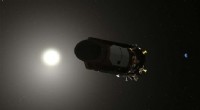
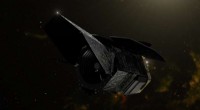
* Space-based telescopes: The Solar and Heliospheric Observatory (SOHO), the Solar Dynamics Observatory (SDO), and the Interface Region Imaging Spectrograph (IRIS) are just a few examples of telescopes dedicated to studying the Sun.
* Ground-based telescopes: Scientists use large ground-based telescopes like the McMath-Pierce Telescope at Kitt Peak National Observatory to gather data on solar oscillations.
Limitations:
* The information we get about the Sun's interior is indirect, relying on mathematical models and interpretations of observed data.
* We can't directly measure the wave properties at every point inside the Sun.
* The Sun is a complex and dynamic object, making it challenging to fully understand the behavior of its internal waves.
Despite these limitations, helioseismology is a powerful tool for studying the Sun's internal structure and dynamics, helping us understand our nearest star better.