Here's what we can use to understand the positioning of celestial bodies:
* Galactic Coordinates: Similar to how we use latitude and longitude on Earth, astronomers use galactic coordinates to pinpoint objects in the sky. The galactic coordinate system uses the galactic equator (a plane that passes through the Milky Way's center) and the galactic center as reference points. Objects are then described by their galactic longitude (how far they are from the galactic center) and galactic latitude (how far they are from the galactic equator).
* Distance Measurements: To get a complete picture of an object's position, we need to know its distance from us. This is done through various techniques like:
* Parallax: Measuring the apparent shift of an object against the background as the Earth orbits the Sun.
* Standard Candles: Observing objects with known intrinsic brightness (like Cepheid variable stars or supernovae) and using their apparent brightness to estimate distance.
* Redshift: Measuring the shift of light towards longer wavelengths (redshift) due to the expansion of the universe.
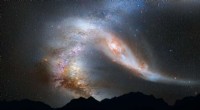
* Mapping the Milky Way: By combining distance measurements and galactic coordinates, we can build up a map of the Milky Way, showing the positions of stars, gas clouds, and other objects.
Therefore, while there isn't a singular "galactic orientation map," we can combine various techniques to understand the position of celestial bodies relative to the Milky Way.
Let me know if you have any other questions about specific aspects of galactic mapping!