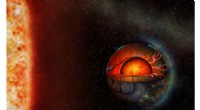
* Star: A star is a giant ball of hot gas that emits light and heat due to nuclear fusion occurring in its core. They are individual celestial objects, like our Sun.
* Constellation: A constellation is a group of stars that appear close together in the sky from our perspective on Earth. These stars are actually very far apart from each other, but we see them as a pattern due to our viewpoint. Constellations are like a human-made "connect-the-dots" picture formed by stars.
Here's an analogy:
* Imagine a bunch of individual light bulbs scattered across a large field. Each light bulb represents a star.
* Now, imagine someone standing at a distance and connecting some of those light bulbs with lines to create pictures in their mind. These pictures would be like constellations.
Key Differences:
* Nature: Stars are individual celestial bodies, while constellations are patterns formed by our perception.
* Distance: Stars are vastly distant from each other, while constellations are merely visual groupings.
* Scientific Significance: Stars are objects of scientific study, while constellations are cultural constructs.
Fun Fact: The constellations we see today are based on ancient civilizations' interpretations of the sky. Their names and stories have been passed down through generations!