* Red giants are a diverse group: Stars become red giants at different stages of their lives, and they can vary significantly in size.
* Size depends on initial mass: The larger the initial mass of a star, the larger it will become as a red giant.
* Red giants are still evolving: As a red giant ages, it continues to expand and change.
Here's a general idea:
* Small red giants: These are typically a few times the diameter of our Sun, perhaps 10-20 times larger.
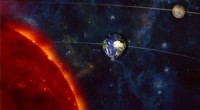
* Large red giants: Stars that began much more massive than our Sun can become hundreds or even thousands of times the diameter of the Sun. Some red giants could even be large enough to engulf the orbits of planets like Mercury, Venus, and Earth.
Examples:
* Arcturus: This is one of the brightest stars in the sky and a red giant about 25 times the diameter of the Sun.
* Betelgeuse: A supergiant star that is about 900 times the diameter of the Sun. It's so large that if it were placed at the center of our Solar System, it would extend out past the orbit of Jupiter!
In short: Red giants are incredibly diverse in size, and it's impossible to give a single diameter. The best answer is that they can range from a few times the size of our Sun to hundreds or even thousands of times larger.