Visually:
* Color: Jupiter is known for its vibrant, swirling bands of color. These bands are different shades of white, red, orange, and brown, created by different chemicals and atmospheric currents.
* Great Red Spot: The most famous feature is the Great Red Spot, a giant storm that's been raging for centuries. It's so big, it could fit two to three Earths within it.
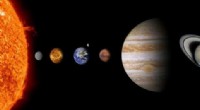
* Moons: Jupiter has a massive family of 79 moons, some of which are visible through telescopes, giving it a very "busy" appearance.
* Overall shape: Jupiter appears as a large, round disc with its banded structure clearly visible.
Details from photographs and spacecraft:
* Bands: The bands on Jupiter are actually massive jet streams that travel in opposite directions. These create turbulence and storms, including the Great Red Spot.
* Atmosphere: Jupiter's atmosphere is composed primarily of hydrogen and helium, with traces of other gases like methane, ammonia, and water vapor.
* Magnetic field: Jupiter has a powerful magnetic field, much stronger than Earth's, creating a huge magnetosphere that traps particles.
* Moons: The moons of Jupiter are diverse, ranging from icy worlds like Europa and Ganymede to volcanic Io and the asteroid-like Amalthea.
In summary, Jupiter looks like a giant, colorful ball of gas with swirling bands and a prominent red spot. It has a family of moons that add to its complexity and beauty.