Ground-Based Telescopes:
* Optical Telescopes: These are the most familiar type, using lenses or mirrors to collect and focus visible light.
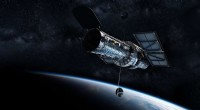
* Examples: Hubble Space Telescope, Keck Observatory, Very Large Telescope
* Radio Telescopes: These detect radio waves emitted by celestial objects.
* Examples: Arecibo Observatory, Very Large Array
* Infrared Telescopes: Detect infrared radiation, which can penetrate dust clouds and reveal hidden objects.
* Examples: Spitzer Space Telescope, James Webb Space Telescope
* Ultraviolet Telescopes: Study ultraviolet radiation, which can reveal hot, young stars and other energetic phenomena.
* Examples: GALEX, Hubble Space Telescope (in UV mode)
* X-ray Telescopes: Detect X-rays emitted by extremely hot objects like black holes and neutron stars.
* Examples: Chandra X-ray Observatory, XMM-Newton
* Gamma-ray Telescopes: Detect high-energy gamma rays, revealing the most energetic processes in the universe.
* Examples: Fermi Gamma-ray Space Telescope, Compton Gamma Ray Observatory
Spacecraft:
* Orbiters: These spacecraft circle a celestial body, taking close-up images and gathering data.
* Examples: Mars Reconnaissance Orbiter, Cassini (Saturn)
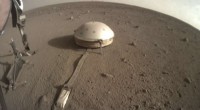
* Landers: These spacecraft land on a celestial body, collecting data on the surface and atmosphere.
* Examples: Viking landers (Mars), Philae (comet 67P)
* Rovers: These robotic vehicles explore the surface of a celestial body, taking samples and performing experiments.
* Examples: Curiosity and Perseverance (Mars)
* Flyby Missions: These spacecraft pass by a celestial body, taking brief measurements and images.
* Examples: New Horizons (Pluto), Voyager 1 & 2 (outer solar system)
Other Instruments:
* Spectrometers: These instruments break light into its component colors, providing information about the chemical composition and temperature of objects.
* Interferometers: These instruments combine light from multiple telescopes to achieve higher resolution and sensitivity.
* Particle Detectors: These instruments detect and analyze particles from space, such as cosmic rays.
* Magnetometers: These instruments measure magnetic fields.
* Gravity Sensors: These instruments measure gravitational forces.
Data Analysis:
In addition to the instruments themselves, powerful computers and sophisticated software are essential for analyzing the data collected from these instruments. This includes algorithms for image processing, data interpretation, and modeling of celestial objects and processes.
Note: This is not an exhaustive list, as new technologies and instruments are constantly being developed for exploring the universe.