Optical Telescopes:
* Refracting telescopes: These use lenses to focus light. They are good for observing planets and bright stars.
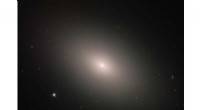
* Reflecting telescopes: These use mirrors to focus light. They are better for observing faint objects like galaxies and nebulae.
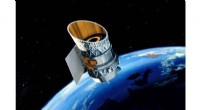
* Space telescopes: These are telescopes placed in orbit around Earth, above the atmosphere. They can observe a wider range of wavelengths of light than telescopes on Earth. Examples include the Hubble Space Telescope and the James Webb Space Telescope.
Radio Telescopes:
* Radio telescopes: These detect radio waves emitted by objects in space. They are used to study objects like pulsars, quasars, and active galactic nuclei.
Other Tools:
* Spectrographs: These instruments break light into its component wavelengths, allowing scientists to study the chemical composition and motion of objects in space.
* Cameras: Digital cameras attached to telescopes allow scientists to take pictures of celestial objects.
* Interferometers: These use multiple telescopes to observe the same object, combining the signals to achieve higher resolution images.
Beyond Light:
* Neutrino detectors: Detect tiny particles called neutrinos, which are very difficult to observe.
* Gravitational wave detectors: Detect ripples in space-time caused by massive events like black hole collisions.
The specific tools used by scientists depend on the type of object they are observing and the research questions they are trying to answer.