1. Observing their gravitational influence:
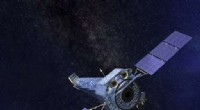
* X-ray emissions: As matter falls into a black hole, it heats up to incredibly high temperatures and emits X-rays. This X-ray radiation can be detected by telescopes like Chandra and XMM-Newton.
* Binary star systems: Black holes often exist in binary systems with a normal star. As the black hole pulls matter from its companion star, it creates a swirling disk of hot gas that emits X-rays.
* Gravitational lensing: Black holes warp spacetime, bending light that passes nearby. This effect can be observed as a distortion of background objects, such as distant galaxies.
* Gravitational waves: When two black holes merge, they release powerful gravitational waves that ripple through spacetime. These waves can be detected by observatories like LIGO and Virgo.
2. Studying the motion of stars and gas:
* Orbital motions: By observing the movement of stars and gas clouds around a central point, astronomers can deduce the presence of a massive object, potentially a black hole.
* Doppler shifts: The Doppler effect, which changes the frequency of light based on the object's motion, can be used to determine the speed of stars and gas orbiting a black hole.
3. Observing the accretion disk:
* Spectroscopy: The light emitted from the accretion disk can be analyzed to identify the elements present and determine the temperature and density of the gas.
* Polarization: The light from the accretion disk can be polarized, revealing information about the magnetic fields and the structure of the disk.
4. Looking for evidence of stellar evolution:
* Supernova remnants: The collapse of a massive star can lead to the formation of a black hole. Observing supernova remnants can offer clues about the existence of a black hole.
While we can't see black holes directly, these indirect methods provide convincing evidence for their existence and allow us to study their properties.