1. Stars:
* Types: Our galaxy contains billions of stars of various types, including red dwarfs, giant stars, supergiants, and white dwarfs.
* Distribution: Stars are concentrated in a disk with spiral arms and a central bulge.
* Age: Stars in the Milky Way vary in age, with some being very old and others being relatively young.
2. Gas and Dust:
* Composition: Primarily hydrogen and helium, with traces of other elements.
* Role: Gas and dust are the raw materials for star formation. They are also responsible for obscuring our view of the galaxy in certain regions.
* Distribution: Concentrated in spiral arms, particularly in the disk, and in clouds called nebulae.
3. Dark Matter:
* Nature: An unknown form of matter that does not interact with light.
* Evidence: Its presence is inferred through its gravitational influence on visible matter.
* Role: Dark matter plays a crucial role in the structure and evolution of the galaxy. It makes up about 85% of the galaxy's total mass.
4. Black Hole:
* Location: At the center of the Milky Way, resides a supermassive black hole called Sagittarius A*.
* Mass: Millions of times the mass of our sun.
* Influence: Its gravitational pull affects the motions of nearby stars and gas.
5. Other Objects:
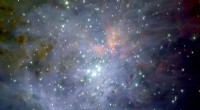
* Nebulae: Clouds of gas and dust where stars are born.
* Globular Clusters: Dense collections of stars.
* Open Clusters: Loosely bound groups of stars.
* Planetary Systems: Systems of planets orbiting stars, including our own solar system.
6. Galactic Halo:
* Composition: Sparsely populated region surrounding the galactic disk, containing older stars and globular clusters.
* Role: The halo provides a structural context for the galaxy.
7. Galactic Center:
* Location: The central bulge of the Milky Way.
* Features: Contains a high density of stars, gas, and dust, including Sagittarius A*.
Overall, the Milky Way is a dynamic and complex system, constantly evolving with the birth and death of stars, the interaction of gas and dust, and the influence of dark matter and the supermassive black hole.