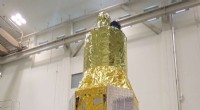
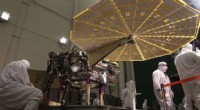
* Transmitter: The probe has a powerful radio transmitter that converts the data (images, scientific readings, etc.) into radio waves.
* Antenna: A large dish antenna directs the radio waves in a focused beam towards Earth.
* Deep Space Network (DSN): On Earth, a network of giant radio antennas called the DSN is specifically designed to receive these signals from deep space.
* Signal Reception and Processing: The DSN antennas capture the faint radio waves and send them to ground stations where they are amplified, decoded, and processed.
* Data Analysis: Scientists analyze the processed data to gain valuable insights about the celestial objects being studied.
Key points about radio waves:
* Speed: Radio waves travel at the speed of light, allowing for near-instantaneous communication with Earth.
* Distance: The vast distances involved in space exploration mean the signals are extremely faint by the time they reach Earth. This requires powerful transmitters and sensitive receivers.
* Data Rate: The amount of data that can be sent is limited by the strength of the signal and the capabilities of the probe and Earth station.
* Doppler Shift: The movement of the probe causes a slight shift in the frequency of the radio waves. This is used to measure the probe's velocity.
In addition to radio waves, space probes also use:
* Optical Communication: Some probes use lasers to send data back to Earth. This method allows for higher data rates, but it is currently limited to shorter distances.
* Telemetry: This refers to the continuous stream of data that the probe sends back about its internal functions and health.
So, the next time you see a stunning image of a distant planet or comet, remember that it was sent to Earth by radio waves, a testament to our ingenuity in exploring the cosmos!