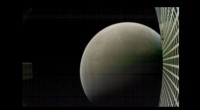
* Distance from the Sun: Mercury is the closest planet to the Sun, so it receives a lot of sunlight. This makes it potentially very bright.
* Distance from Earth: Mercury's orbit is highly elliptical, meaning its distance from Earth varies significantly. When it's closer to Earth, it appears brighter.
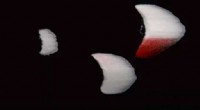
* Phase: Like the Moon, Mercury goes through phases, appearing as a crescent, gibbous, or full disk depending on its position relative to the Sun and Earth. A full Mercury is the brightest, but this is rare.
Generally, Mercury's brightness is:
* At its brightest: It can reach a magnitude of -2.0, making it one of the brightest objects in the sky, rivaling Jupiter and Venus.
* At its dimmest: It can be as faint as magnitude +7.0, barely visible to the naked eye.
To find out how bright Mercury is at a given time:
* You can use a planetarium app or website like Stellarium, SkySafari, or websites like In-The-Sky.org. These tools will show you the current position, brightness, and visibility of Mercury.
* You can also consult astronomical calendars and ephemerides.
Keep in mind that:
* Mercury is difficult to see because it is often lost in the glare of the Sun.
* It's best to look for it during twilight, either shortly after sunset or before sunrise.
Let me know if you have any more questions!