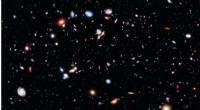
* Vastness of Space: Our galaxy, the Milky Way, contains billions of stars. The universe itself has billions of galaxies. This sheer size makes it statistically improbable that we've found all the planets out there.
* Detection Challenges: Current planet-finding methods, like the transit method (looking for dips in starlight as a planet passes in front of its star) and the radial velocity method (detecting the wobble of a star caused by a planet's gravity), have limitations. They primarily detect large planets close to their stars, and struggle to find smaller planets or those further away.
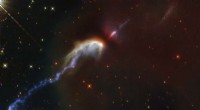
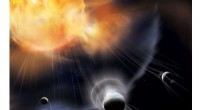
* Planet Formation: We know planets form from disks of gas and dust around young stars. The abundance of these disks and the various ways planets can form suggest there's a vast potential for planet diversity.
Examples of recent discoveries:
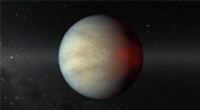
* Kepler Mission: This space telescope discovered thousands of exoplanets, significantly increasing our understanding of planetary systems beyond our own.
* TESS Mission: The Transiting Exoplanet Survey Satellite continues to find new planets, focusing on nearby stars.
Future Possibilities:
* Next-generation telescopes: More powerful telescopes like the James Webb Space Telescope are expected to provide even more detailed observations, allowing us to find smaller, more distant planets and potentially even search for signs of life.
* New detection methods: Researchers are constantly developing new techniques to detect exoplanets, including direct imaging and gravitational lensing.
While we've made great strides in exoplanet discovery, there's still a vast, unexplored ocean of planets out there waiting to be discovered.