1. Radial Velocity (Doppler Spectroscopy):
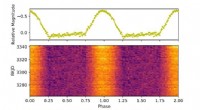
* How it works: This method looks for tiny wobbles in a star's motion caused by the gravitational pull of an orbiting planet. The wobble causes a shift in the star's light spectrum, which can be detected by measuring the Doppler effect (similar to how the pitch of a siren changes as it moves towards or away from you).
* Strengths: Can detect large planets relatively close to their star.
* Limitations: Less sensitive to small planets or planets far from their star.
2. Transit Method:
* How it works: This method observes a star's brightness over time. If a planet passes in front of the star (a transit), the star's brightness will dip slightly.
* Strengths: Can detect planets of various sizes and distances from their star.
* Limitations: Can only detect planets that orbit their star in a plane that is aligned with our line of sight.
3. Astrometry:
* How it works: This method precisely measures the position of a star over time to detect the tiny wobble caused by an orbiting planet.
* Strengths: Can detect planets of various sizes and distances, and can reveal the planet's orbital plane.
* Limitations: Extremely difficult to achieve the required precision.
4. Gravitational Microlensing:
* How it works: This method uses the bending of light due to gravity. When a star passes in front of another star, the gravity of the foreground star can magnify the light of the background star. If the foreground star has a planet, the planet's gravity can also contribute to the lensing effect, providing evidence for its presence.
* Strengths: Can detect planets of various sizes and distances, even very far away.
* Limitations: The alignment of the stars needs to be just right for this effect to occur, making it a relatively rare event.
5. Direct Imaging:
* How it works: This method attempts to directly image a planet orbiting a star, using sophisticated telescopes and image processing techniques to separate the planet's faint light from the star's glare.
* Strengths: Can provide direct information about the planet's atmosphere and composition.
* Limitations: Very challenging, especially for planets close to their star.
By combining these different methods, astronomers are able to gather a wealth of information about exoplanets, including their size, mass, composition, and orbital characteristics. While there are still many unknowns about these distant worlds, our understanding of exoplanets is constantly evolving.