1. Spacecraft:
* Orbiting Observatories: Telescopes like Hubble and James Webb are launched into space to observe celestial objects without interference from Earth's atmosphere. They capture images and collect data in various wavelengths, from visible light to infrared and X-rays.
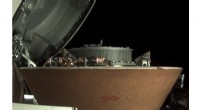
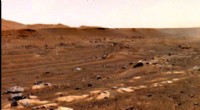
* Robotic Missions: Space probes like Voyager, Curiosity, and Juno travel to planets, moons, and asteroids to gather data, take pictures, and analyze samples.
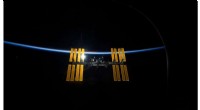
* Crewed Missions: Astronauts on the International Space Station (ISS) conduct experiments and research, and future missions will see humans exploring the Moon and Mars.
2. Telescopes:
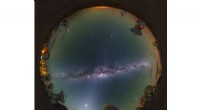
* Ground-Based Telescopes: Giant telescopes like the Very Large Telescope (VLT) and the Gemini Observatory are built on Earth, offering detailed views of the cosmos.
* Radio Telescopes: These telescopes detect radio waves emitted by celestial objects, revealing information about stars, galaxies, and the early universe.
3. Data Analysis:
* Scientists analyze data from spacecraft, telescopes, and other sources. They use sophisticated software and computer models to understand the universe's composition, evolution, and processes.
4. Computer Simulations:
* Scientists create virtual simulations of celestial objects and events to test theories and explore phenomena that are difficult to observe directly.
5. Theoretical Studies:
* Theoretical astrophysicists use mathematical equations and physical laws to develop models of the universe and its components. Their theories are constantly tested and refined by observational data.
6. Collaboration:
* Space exploration is a global effort. Scientists from different countries work together on missions and projects, sharing data and expertise.
Key Areas of Exploration:
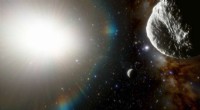
* Planets and their moons: Studying atmospheres, geology, and the possibility of life.
* Stars and galaxies: Understanding their formation, evolution, and the distribution of matter in the universe.
* Black holes and other extreme objects: Investigating the physics of these powerful phenomena.
* The search for extraterrestrial life: Exploring planets and moons for signs of life, past or present.
* The early universe: Studying the cosmic microwave background radiation to learn about the universe's origins.
By utilizing these diverse methods, scientists continue to unravel the mysteries of the universe and expand our knowledge of the cosmos.