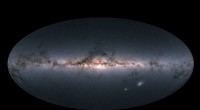
1. Stars:
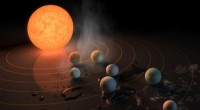
* These are giant balls of hot, glowing gas, primarily hydrogen and helium.
* They generate energy through nuclear fusion, which releases light and heat.
* Our Sun is a star.
2. Planets:
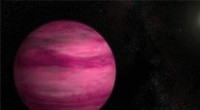
* These are large celestial bodies that orbit stars.
* They do not emit their own light, but reflect light from their star.
* Planets can be rocky (like Earth) or gaseous (like Jupiter).
3. Moons:
* Natural satellites that orbit planets.
* They are smaller than planets and do not emit their own light.
* Our Earth has one moon.
4. Asteroids:
* Rocky, irregularly shaped objects that orbit the Sun.
* They are much smaller than planets.
* Most asteroids are located in the asteroid belt between Mars and Jupiter.
5. Comets:
* Icy bodies that orbit the Sun in highly elliptical paths.
* As they get closer to the Sun, they heat up and release gas and dust, forming a visible tail.
6. Nebulae:
* Giant clouds of gas and dust in space.
* They are often the birthplace of stars.
* Nebulae can be bright and colorful, or dark and obscured.
7. Galaxies:
* Vast collections of stars, gas, dust, and dark matter held together by gravity.
* Our Milky Way galaxy is a spiral galaxy.
8. Black Holes:
* Regions of spacetime where gravity is so strong that nothing, not even light, can escape.
* They are formed when massive stars collapse at the end of their lives.
9. Dwarf Planets:
* Celestial bodies that orbit the Sun and are large enough to be round, but not massive enough to clear their orbit of other objects.
* Examples include Pluto and Ceres.
10. Other Objects:
* There are many other cosmic bodies in space, including:
* Satellites: Artificial objects that orbit the Earth.
* Spacecraft: Vehicles that travel in space.
* Meteoroids: Small pieces of rock or metal in space.
* Meteors: Meteoroids that enter the Earth's atmosphere.
It's important to note that this list is not exhaustive. The universe is vast and constantly being explored, and new discoveries are being made all the time.