1. Supernova Explosions:
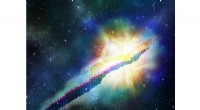
* The most dramatic source of nebulae is from the violent death of massive stars. When a star many times larger than our sun runs out of fuel, it explodes in a supernova. This explosion blasts out immense amounts of gas and dust into space, forming a spectacular nebula.
* These nebulae are often called supernova remnants and are filled with the elements forged in the star's core, enriching the interstellar medium. Examples include the Crab Nebula and the Veil Nebula.
2. Stellar Winds and Eruptions:
* Even less massive stars, like our own sun, can contribute to nebula formation. These stars constantly release streams of charged particles known as stellar winds.
* These winds, along with powerful stellar flares and coronal mass ejections, can push gas and dust away from the star, creating a nebula.
* These nebulae are often called planetary nebulae, although they have nothing to do with planets. The term arose from their initial appearance through telescopes, which resembled planets. Examples include the Helix Nebula and the Ring Nebula.
3. Interstellar Gas and Dust:
* In some cases, nebulae can arise from vast clouds of interstellar gas and dust that are already present in the universe.
* These clouds can be triggered to collapse and form new stars by various factors, such as shockwaves from supernovae or gravitational interactions with other clouds.
* These nebulae are often called emission nebulae when they are illuminated by nearby stars and reflection nebulae when they scatter light from nearby stars. Examples include the Orion Nebula and the Trifid Nebula.
4. Interactions between Galaxies:
* On a grander scale, interactions between galaxies can lead to the formation of nebulae.
* When galaxies collide or pass close to each other, their gravitational forces can pull gas and dust from each other, creating vast regions of nebulae.
* This process can trigger new star formation within the galaxies, leading to vibrant bursts of star formation.
Overall, nebulae are a testament to the dynamic and ever-changing nature of the universe. They represent the birthplaces of new stars and planets, as well as the remnants of stars that have lived and died. They are also crucial to the ongoing cycle of matter and energy within the universe.