General Observations:
* Stars are points of light: Even through powerful telescopes, most stars appear as tiny points of light. This is because they are incredibly far away.
* Color: Stars come in a range of colors depending on their temperature. Hotter stars appear blue or white, while cooler stars are red or orange.
* Twinkling: The twinkling of stars, technically called scintillation, is caused by the Earth's atmosphere. It's much more pronounced when viewed through a telescope.
Beyond Points of Light:
* Giant Stars: Some stars, like Betelgeuse, are so large that even through a telescope they appear as a tiny disc.
* Binary Stars: Many stars are actually pairs (or even larger groups) orbiting each other. With a telescope, you can often see these as two points of light close together.
* Variable Stars: Certain stars change in brightness over time. Telescopes can help track these variations.
* Planetary Nebulae: When a star dies, it can eject gas and dust into space, creating beautiful, colorful nebulae. These are visible through telescopes.
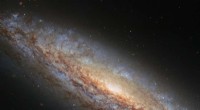
* Galaxies: Even though you're focusing on a single star, you might be able to see the faint, distant light of other galaxies in the background.
Important Note: The detail you can see depends on the size and quality of your telescope, the specific star you're observing, and the atmospheric conditions.
To get a better idea of what specific stars look like, you can:
* Use online star charts: These will tell you what kind of star it is, its color, and its apparent magnitude (brightness).
* Check out astronomical websites: Many websites have images of stars taken through telescopes, giving you a visual representation.
Let me know if you have any specific stars you want to learn about!