1. Light Analysis:
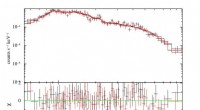
* Spectroscopy: By splitting starlight into its component colors (a spectrum), scientists can identify the chemical composition of the star. Each element has unique absorption lines in its spectrum, revealing what the star is made of.
* Brightness and Color: The brightness and color of a star tell us its temperature and size. Hotter stars are bluer, while cooler stars are redder.
* Redshift: Light from distant objects is stretched (redshifted) due to the expansion of the universe. The amount of redshift tells us how far away a galaxy is.
2. Telescopes and Observatories:
* Ground-based telescopes: Large telescopes like the Very Large Telescope (VLT) in Chile can collect faint light from distant stars, allowing detailed analysis.
* Space telescopes: Telescopes like Hubble and James Webb are above the Earth's atmosphere, providing clearer images and access to wavelengths of light blocked by the atmosphere.
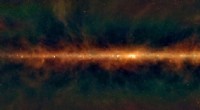
* Radio telescopes: These telescopes detect radio waves emitted by stars, giving insights into phenomena like star formation and supernovas.
3. Mathematical Modeling:
* Stellar evolution models: Scientists have developed detailed models that describe the life cycle of stars, from their formation to their death. These models allow us to understand how stars evolve, how long they live, and what their ultimate fate will be.
4. Other Techniques:
* Gravitational lensing: Massive objects can bend the path of light from distant stars, allowing us to study them even if they are behind the lensing object.
* Astrometric measurements: Precise measurements of the positions of stars over time can reveal the presence of unseen objects like planets or black holes.
5. Combining Data:
* By combining data from different telescopes, wavelengths, and techniques, scientists can build a more complete picture of distant stars and their galaxies. This includes information about their age, composition, motion, and even the presence of planets.
In summary, scientists learn about distant stars through careful analysis of light, advanced telescopes, sophisticated models, and a combination of techniques that reveal the secrets of the universe.