* Understanding of Planetary Motion: Scientists have a deep understanding of how planets move around the Sun based on Kepler's Laws of Planetary Motion. These laws describe the elliptical orbits of planets and how their speed varies depending on their position in the orbit.
* Accurate Measurements: Astronomers can very precisely measure the positions of planets in the sky using telescopes and other sophisticated instruments. These measurements allow them to determine the current position of each planet and predict its future position.
* Mathematical Models: Scientists use complex mathematical models to simulate the movements of celestial bodies, including planets, taking into account factors like gravity, interactions with other planets, and the Sun's influence. These models allow them to predict the trajectory of planets with high accuracy.
* Ephemeris Data: Astronomers have created detailed tables called ephemerides that contain precise information about the positions of planets at specific times. These ephemerides are updated regularly as new observations and improved models become available.
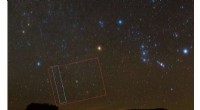
* Software and Technology: Modern software and online resources like Stellarium, SkySafari, and websites like NASA's website provide tools and information that make it easy for anyone to predict the position of planets in the night sky.
By combining these elements, scientists can accurately predict the location of planets in the sky, enabling astronomers and stargazers to plan their observations and enjoy the beauty of the night sky.