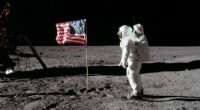
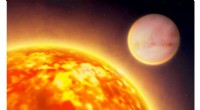
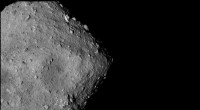
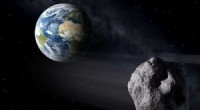
* Astronomy focuses on celestial objects and phenomena beyond Earth's atmosphere. This includes stars, planets, galaxies, nebulae, black holes, and cosmic events like supernovae.
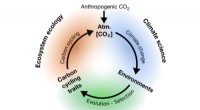
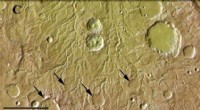
* Earth science, on the other hand, focuses on Earth itself and its systems. This encompasses geology (rocks, minerals, and Earth's structure), meteorology (weather and climate), oceanography (oceans and their processes), and environmental science (interactions between Earth's systems and human activities).
Here's a table highlighting the key distinctions:
| Feature | Astronomy | Earth Science |
|---|---|---|
| Object of Study | Celestial objects and phenomena beyond Earth | Earth and its systems |
| Scope | Vast, encompassing the entire universe | Focused on Earth and its environment |
| Methods | Primarily observational, using telescopes and other instruments | Observational, experimental, and theoretical |
| Focus | Understanding the origin, evolution, and composition of the universe | Understanding Earth's structure, processes, and interactions with humans |
While astronomy and Earth science are distinct disciplines, they are interconnected. For example, understanding the evolution of the Sun is crucial for understanding Earth's climate, and studying meteorites provides insights into the early solar system and the composition of Earth's core.