Pros:
* Flexibility and Adaptability: Spacecraft that can land offer the ability to access a wider range of locations and conduct a variety of scientific and engineering tasks. They can gather samples, deploy instruments, and even conduct experiments on the surface.
* Direct Observation and Sampling: Landing allows for close-up observations and direct sampling of a planet's surface. This provides detailed information about the geology, atmosphere, and potential signs of past or present life.
* Deployment of Rovers and Landers: Orbiting spacecraft can act as platforms for deploying rovers and landers, expanding the exploration capabilities and range of the mission.
* Enhanced Communication and Data Relay: Orbiting spacecraft can act as communication relays, allowing for better data transmission between landers and Earth, as well as providing a broader communication network.
* Global Coverage and Context: Orbiting spacecraft can provide a broader context for the landed missions, offering information about the global environment and the larger picture of the planet.
* Extended Mission Life: Landing on a planet may provide the opportunity for a longer mission life, as the spacecraft can utilize resources and avoid atmospheric drag, compared to an orbiting spacecraft.
Cons:
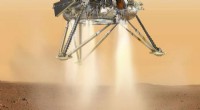
* Increased Complexity and Risk: Landing on a planet poses significant challenges, requiring complex landing systems and increasing the risk of mission failure.
* Limited Mobility: Once landed, the spacecraft's mobility is limited, restricting its ability to explore large areas or different terrains.
* Atmospheric Constraints: Entry into and landing on a planet's atmosphere requires complex and robust heat shields and landing systems, and it's not always feasible depending on the planet's atmospheric conditions.
* Limited Duration: Landing missions often have a shorter lifespan than orbiting missions due to environmental factors like weather and dust.
* Cost and Development Time: Developing a spacecraft capable of landing on a planet is often more complex and resource-intensive, resulting in higher costs and longer development times.
* Surface Hazards: Landing on a planet exposes the spacecraft to potential hazards like craters, uneven terrain, and extreme temperatures, which can damage the spacecraft and compromise the mission.
In conclusion, the decision to land a spacecraft on a planet depends on the mission objectives, the specific characteristics of the target planet, and the available resources. The pros and cons must be carefully weighed to determine the best approach for achieving the desired scientific or engineering goals.