Here's a breakdown:
Light from Stars:
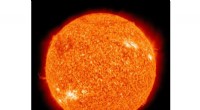
* The vast majority of light in outer space comes from stars. These giant balls of burning gas emit a wide range of light, from infrared to ultraviolet.
* Our Sun is a star, and the light it emits is what makes life possible on Earth.
Other Light Sources:
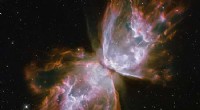
* Nebulae: These are clouds of gas and dust that emit light due to the interaction of their particles with radiation from nearby stars.
* Galaxies: These are massive collections of stars, gas, and dust that also emit light.
* Supernovae: These are powerful explosions that occur at the end of a star's life, releasing a tremendous amount of light.
* Pulsars and Quasars: These are extremely dense and energetic objects that emit powerful beams of radiation.
* Reflected Light: Planets, moons, and asteroids reflect sunlight, making them visible from Earth.
The Darkness of Space:
* While outer space is full of light sources, it's also incredibly vast. The space between stars and galaxies is mostly empty, so the light from these objects is scattered and often faint.
* This is why we see a black sky at night. Even though countless stars are shining, their light is too faint to be seen with the naked eye from Earth.
Overall, outer space is full of light, but it's different from the light we experience on Earth. It's a fascinating and complex phenomenon that has been studied by scientists for centuries.